Jana Schaich Borg, PhD gives speaking engagements on
Moral Artificial Intelligence (AI)
Empathetic AI
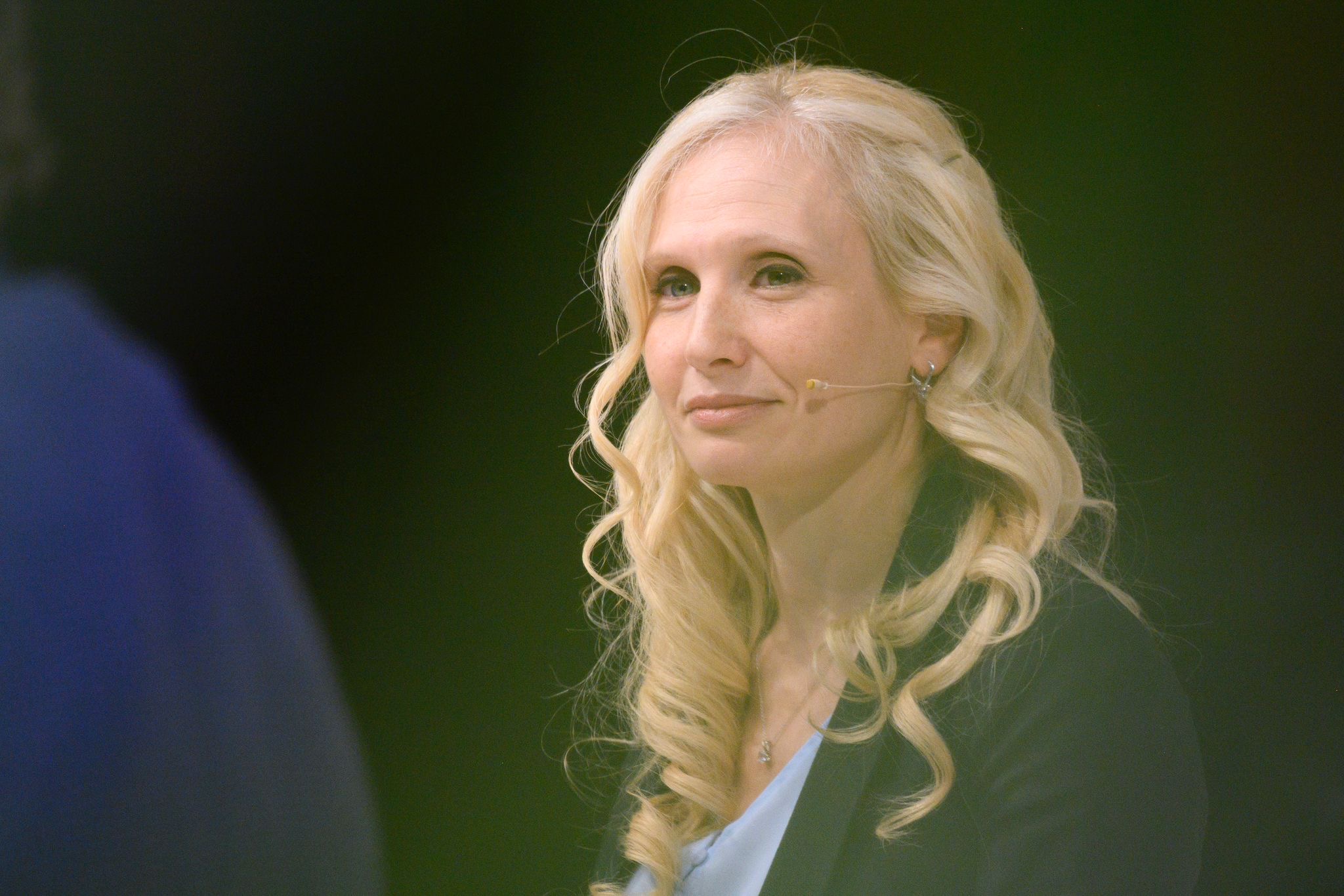
Keynotes and Talks
Moral AI and How We Get There
Keynotes and talks tailored for your group. Great for organizational leaders, tech, teams, and the general public.
Is Moral AI Just About Killer Robots? No, And Why You Should Care
A talk for the general public about morality and artificial intelligence.
Artifical Empathy: The Campaign That May Shape The Next Generation
A talk for all audiences about empathy and artificial intelligence.
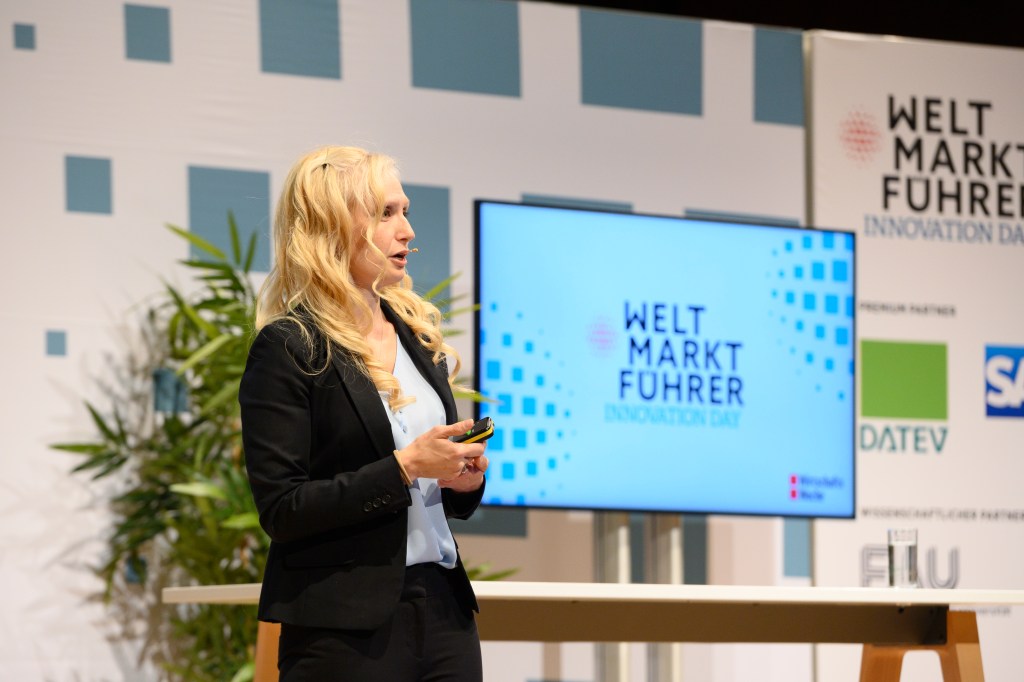
Workshops
Data Visualization
Workshops designed to introduce you to the top three strategies for turning your data visualizations for exploration and analysis into data visualizations that empower efficient data-driven decision-making. My unique approach to data visualization marries insights from decades of cognitive neuroscience and decision science with the modern methodologies of product development to offer a very pragmatic and data-driven set of strategies anyone can use and master. These workshops are particularly well-suited for people in scientific or technical fields who want to turbo boost their data storytelling and communication for non-technical audiences, but are relevant to people of all backgrounds.
Video
Empathic AI Model Cards: A Tool for Supporting Ethical Development of Empathic AI with Jana Schaich Borg
An invited talk for the Empathy, Morality, and AI Conference at Pennsylvania State University
April 9, 2024
Speaking Engagements by year
2024
Moral AI and How We Get There
Schaich Borg., J. and Sinnott-Armstrong, W.
Invited Speaker at UNC Symposium on AI and Society on April 25, 2024
About the talk
Artificial intelligence (AI) is entering more and more areas of our lives. Each new application raises pressing ethical issues. AI pessimists are worried about potential abuses. AI optimists are hopeful about potential benefits. Both are correct, in our view. To show why, we will survey some good news and the bad news about safety, privacy, justice, and responsibility in AI. Then we will propose ways to make AI more moral by building human morality into AI systems and AI companies. This talk summarizes the main points in our recent book with Vincent Conitzer.
Moral AI – How do we get there and how can you get involved?
Jana Schaich Borg
herCAREER Academy
About the talk
What if a machine would determine who gets an organ and who does not? Can Artificial Intelligence be fair? Prof. Dr. Jana Schaich Borg has spent 24 years researching and understanding how individuals make social decisions and how they impact others. For the past seven years, her focus has been on the interactions of humans and AI. There are two major questions here: How could we build morality into an AI system, so it can interact with society in a way that feels aligned with our human values? And how do we make sure we as a society employ AI in a way that is in line with our values? Beyond these big scientific and societal questions, the conversation with Prof. Dr. Schaich Borg will dive into the threats and opportunities that arise from AI, the prototypes of moral machines she is working on in her lab and the role women play and must play in shaping a future, where more and more decisions will be made by AI-systems. About the Speaker Prof. Dr. Jana Schaich Borg is an Associate Research Professor at the Social Science Research Institute at Duke University. She uses neuroscience, computational modeling, and new technologies to study how we make social decisions that influence or are influenced by other people. As a neuroscientist, she analyses the data she collects as a data scientist in interdisciplinary teams. Dr Schaich Borg’s current research projects focus on developing moral artificial intelligence and understanding social bonding, empathy, and human decision-making processes. Based on her research areas, she is involved in the development of practical strategies for the ethical development of artificial intelligence. She is skilled at breaking down the implications of complex analytical problems and communicating them to broad audiences in an understandable way. Together with Walter Sinnott-Armstrong and Vincent Conitzer, she wrote the book „Moral AI – And How We Get There“. The chapters deal with questions such as: What is AI? Is there safe AI? Can AI be fair? And: Can AI incorporate human morality?
Empathic AI Model Cards: A Tool for Supporting Ethical Development of Empathic AI
Schaich Borg., J.
Invited speaker at “Empathy, Morality, and AI” conference at Pennsylvania State University on April 9, 2024
What is Required for Empathic AI
Author and Co-Authors/Speakers
Invited speaker for the Moral Psychology Research Group (MPRG), an invitation-only interdisciplinary group of world scholars in moral judgment on April 6, 2024
A vision for the co-evolution of human and artificial moral intelligence
Schaich Borg., J.
Invited speaker for the National Academies of Science, Engineering, and Medicine workshop on Exploring the Bidirectional Relationship Between Artificial Intelligence and Neuroscience on March 26, 2024
About the talk
There is a longstanding, bidirectional relationship between neuroscience and computer science, especially in the development of artificial intelligence (AI). As AI continues to expand, the consistent engagement of neuroscientists in conversations on the uses, regulation, implications, and public’s concern could shape the field’s trajectory. Anticipating the need for these cross-disciplinary conversations, the National Academies’ Forum on Neuroscience and Nervous System Disorders hosted a 1.5-day workshop in March 2024 that convened a diverse group of experts that examined the current and potential use of AI in neuroscience and examined strategies to enhance public and regulatory understanding of AI utilization.
2023
Using AI to Predict Human Moral Judgments
Schaich Borg., J. and Sinnott-Armstrong, W.
Invited Speaker at “AI meets Moral Philosophy and Moral Psychology” workshop at Conference on Neural Information Processing Systems (NeurIPS) on December 15, 2023
Quantifying Human Social Connection and AI Morality
Schaich Borg., J.
Invited plenary speaker for Duke Women’s Weekend on March 3, 2023
2021
Understanding Bias and Fairness in AI-enabled Healthcare Software
Schaich Borg., J.
Invited panelist for “Understanding Bias and Fairness in AI-enabled Healthcare Software”, hosted by the Duke-Margolis Center for Health Policy on December 17, 2021
About the talk
Duke-Margolis is hosting a virtual public meeting entitled Understanding Bias and Fairness in AI-enabled Healthcare Software. This meeting will convene stakeholders across disciplines for conversations on ways in which bias can affect artificial intelligence (AI) in healthcare software and how to promote fairness in artificial intelligence software, including methods to test for and prevent bias throughout the development process. The meeting will also discuss whether AI itself can play a role in reducing existing biases in the health care setting. Among the expert speakers will be a diverse array of computer scientists, bioethicists, statisticians, anthropologists, and federal regulators.
Morality in Artificial Intelligence
Jana Schaich Borg and Vincent Conitzer, moderated by Walter Sinnott-Armstrong
Session 1 of the Lifelong Learning Series on Artificial Intelligence at Duke University on September 29, 2021
About the talk
Paste the abstract or description here, or delete this Details block.
2020
Legal and Moral Implications of Artificial Intelligence
Schaich Borg., J.
Invited speaker for the International Association of Judges, Legal and Moral Implications of Artificial Intelligence on May 2020
Talk
Jana Schaich Borg
Invited speaker for the Women in Data Science Regional Conference in April 2020
2019
Should Moral AI Help Us Decide Who Gets a Kidney?
Schaich Borg, J., Sinnott-Armstrong, W., Conitzer, V.
Invited speakers for Distinguished Lecture on the Ethics of AI, North Carolina State University, Raleigh, NC on April 15, 2019
2018
Artificial Intelligence in Organ Allocation
Schaich Borg., J.
Invited speaker for the Presidential Symposium at the Eurotransplant Annual Conference, Leiden, the Netherlands on October 4, 2018
Crossing Disciplines and Species to Understand Moral Action
Schaich Borg., J.
Duke Center of Cognitive Neuroscience Seminar Series in Durham, NC on May 4, 2018
2017
Who needs a driver?
Schaich Borg, J., Sinnott-Armstrong, W., Conitzer, V.
Science Café, North Carolina Museum of Natural Sciences on October 12, 2017
2016
State of Big Data Education
Schaich Borg, J., Schwabish, J., Khatri, Lopresti, D., Galbreth, M., Phillips, C.
Invited panelist, Washington, DC on June 9, 2016
Dynamic Neural Network Interactions Underlying Empathic Decision-Making
Schaich Borg., J.
Invited speaker for the Statistical and Applied Mathematical Sciences Institute (SAMSI), Research Triangle Park, NC on April 9, 2016
Designing Online Courses for Active Learning
Schaich Borg., J.
Invited speaker for the Coursera Partners Conference, The Hague, Netherlands on March 21, 2016
2015
The Amygdala as a Network ‘Coordinator’ in Rat Empathic Avoidance
Schaich Borg., J.
Association for Psychological Science Annual Convention, New York City, NY on May 24, 2015
2014
Moral Judgment in Psychopaths
Schaich Borg., J.
Invited speaker for the Moral Psychology Research Group, an invitation-only interdisciplinary group of world scholars in moral judgment, New Orleans, LA on November 8, 2014
Innovation through Integration: Bridging the Translational Divide
Schaich Borg, J. and Dzirasa, K.
Invited speaker at Duke Psychiatry and Behavioral Sciences Grand Rounds, Duke University School of Medicine, Durham, NC on August 21, 2014
The Brain’s Disgust with Morality
Schaich Borg, J.
Invited speaker for the Moral Psychology Research Group, Durham, NC on April 26, 2014
2011
The Classification and Anatomy of Moral Judgments
Schaich Borg, J.
Invited speaker at the Morality and the Cognitive Sciences Conference, Riga, Latvia on May 7, 2011
2010
Recent Developments in the Neuroscience of Moral Decision-making: Implications for Ethics and Law?
Schaich Borg, J.
Invited speaker at the Fourth International Legal Ethics Conference, Stanford, CA on July 17, 2010
A Primer on the Neural Basis of Moral Decision Making
Schaich Borg, J.
Invited speaker for “Neuroimaging and the Law” workshop, Halifax, Canada on May 20, 2010
2009
Moral Judgments by Psychopaths
Schaich Borg, J. and Sinnott-Armstrong, W.
Invited speaker at the MacArthur Foundation Psychopathy and the Law Symposium (a pre-conference to the Society for the Scientific Study of Psychopathy annual meeting), New Orleans, LA on April 16, 2009
Neuroscience and the Courts: The Implications of Advances in Neurotechnology
Schaich Borg, J.
Invited panelist, Stanford Technology Law Review, Stanford Law School, Stanford, CA on February 27, 2009
2008
Questioning the role of the Ventromedial Prefrontal Cortex in the Diminished Moral Capacity of Psychopaths
Schaich Borg, J.
Invited speaker at the MacArthur Foundation Law and Neuroscience Project meeting, Stanford, CA on January 24, 2008
2007
The Common and Distinct Neural Correlates of Pathogen and Socio-moral Disgust
Schaich Borg, J., Lieberman, D., and Kiehl, K.
Speaker at Neural Systems of Social Behavior Conference, Austin, TX on May 12, 2007
About the talk
The emotion of disgust can be partitioned into three distinct functional domains: pathogen disgust, sexual disgust, and moral disgust. Using adaptationist logic, we propose that disgust first evolved to mediate the avoidance of disease-causing agents, and then was co-opted as new selective pressures arose to guide decisions regarding mating behavior and, ultimately, other social interactions. We discuss findings from our fMRI study investigating the possible neural correlates of these proposed domains. Specifically, our study explored whether: (i) pathogen, sexual, and moral disgust activate common neural systems, and (ii) these three domains also entrain separate cognitive and behavioral systems specific to their respective evolved functions. Fifty male participants completed a set of surveys, and afterwards were scanned while performing a memory task that presented neutral statements, statements describing pathogen related acts (pathogen disgust), statements describing incestuous acts (sexual disgust), and
statements describing non-sexual socio-moral transgressions (moral disgust). Conjunction analyses indicated that pathogen, sexual, and moral disgust indeed activate common neural systems, and planned comparisons provided evidence that each functional disgust domain also has additional, unique neural correlates. Self-report data revealed distinct patterns of reactions to pathogen, sexual, and moral disgust providing additional support for our proposed model. We will discuss these and other related findings, as well as consider the implications our data have for the study of morality.
2006
Morality and Ethics in the Brain: Applications for Clinical Cognitive Neuroscience
Schaich Borg, J.
Psychopharmacology/Neuroscience Grand Rounds, Hartford Hospital, CT on February 23, 2006
2005
Consequences, Action, and Intention as Factors in Moral Judgments
Schaich Borg, J. and Sinnott-Armstrong, W.
Invited speaker for the Program of Neuroscience Seminar series, Princeton University, NJ on September 25, 2005
Morality in the Brain
Schaich Borg, J. and Sinnott-Armstrong, W.
Invited speaker at the Center for Bioethics, Columbia University, NY on February 24, 2005
 Jana Schaich Borg